Parts of a Shoe Explained in Simple Terms: A Founder's Guide to Footwear Development
"Many first-time footwear founders believe designing a shoe is about creating a great-looking sketch. In reality, a shoe is a collection of dozens of individual components. Understanding these parts is one of the most important steps in building a successful footwear brand."
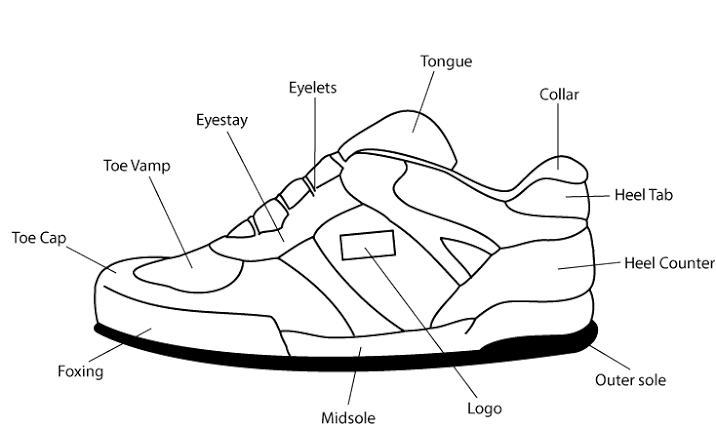
Many first-time footwear founders believe designing a shoe is about creating a great-looking sketch.
In reality, a shoe is a collection of dozens of individual components working together to deliver comfort, durability, performance, and style.
Understanding these components is one of the most important steps in building a successful footwear brand.
You do not need to become a footwear engineer.
But you do need to understand the language of footwear development.
Whether you are launching a sneaker brand, developing a sports shoe, or creating a fashion footwear line, knowing the basic parts of a shoe will help you make better decisions throughout the product development process.
This guide explains the key parts of a shoe in simple terms and shows how each component influences the final product.
Why Founders Should Understand Shoe Construction
One of the most common mistakes made by footwear startups is focusing entirely on aesthetics.
The shoe may look great in a rendering.
But once the first sample arrives, problems begin to appear:
- ●Poor fit
- ●Uncomfortable feel
- ●Excessive weight
- ●Weak durability
- ●Production challenges
Most of these issues can be traced back to decisions made during development.
The more founders understand footwear construction, the easier it becomes to communicate with:
- ●Designers
- ●Developers
- ●Factories
- ●Material suppliers
- ●Sourcing partners
This knowledge often saves significant time and money.
The Upper: What You See First
The upper is the entire top portion of the shoe.
When people think about sneaker design, they are usually looking at the upper.
It is responsible for:
- ●Appearance
- ●Fit
- ●Breathability
- ●Support
The upper may be made from:
- ●Leather
- ●Synthetic leather
- ●Mesh
- ●Knit materials
- ●Textile fabrics
The material chosen affects comfort, durability, weight, and cost.
A lightweight running shoe often uses engineered mesh.
A lifestyle sneaker may use premium leather.
The upper plays a major role in defining the personality of the product.
The Toe Box: Where Your Toes Live
The toe box is the front section of the shoe that surrounds your toes.
It may seem simple, but it has a huge impact on comfort.
If the toe box is too narrow:
- ●Toes feel cramped
- ●Comfort decreases
- ●Customer complaints increase
If it is too wide:
- ●The shoe may feel unstable
Finding the right balance requires proper footwear development and fit testing.
Many footwear returns happen because of poor toe box design.
The Tongue: More Important Than You Think
The tongue is the padded piece located beneath the laces.
Its job is to:
- ●Protect the top of the foot
- ●Improve comfort
- ●Help distribute lace pressure
A poorly designed tongue can create pressure points that make a shoe uncomfortable during long periods of wear.
Premium sneaker brands often spend considerable time refining tongue construction.
Laces: More Than Decoration
Most people think laces simply keep the shoe attached to the foot.
They do much more than that.
Laces help control:
- ●Fit
- ●Lockdown
- ●Comfort
- ●Stability
Different lace systems create different user experiences.
Performance footwear often uses advanced lacing systems to improve foot security.
Lifestyle footwear may prioritize aesthetics.
Even small lace decisions affect customer perception.
The Heel Counter: The Hidden Support System
The heel counter is an internal reinforcement located at the back of the shoe.
You usually cannot see it.
However, it plays a critical role.
The heel counter helps:
- ●Stabilize the foot
- ●Maintain shape
- ●Improve durability
Without proper heel support, a shoe may collapse or feel unstable during movement.
This component is particularly important in athletic footwear.
The Insole: What Your Foot Actually Touches
The insole sits inside the shoe.
It is the surface your foot directly contacts.
Its primary purpose is to improve:
- ●Comfort
- ●Cushioning
- ●Support
Many consumers underestimate the importance of insoles.
However, upgrading an insole can dramatically improve how a shoe feels.
A great-looking sneaker with a poor insole often receives negative feedback.
A well-designed insole can transform the customer experience.
The Midsole: The Comfort Engine
If there is one component that determines comfort, it is usually the midsole.
The midsole sits between the upper and outsole.
Its job is to provide:
- ●Cushioning
- ●Shock absorption
- ●Energy return
Popular midsole materials include:
- ●EVA
- ●PU
- ●Performance foams
The midsole directly influences how soft, firm, responsive, or supportive a shoe feels.
Many consumers describe comfort without realizing they are actually talking about the midsole.
The Outsole: The Part That Meets the Ground
The outsole is the bottom surface of the shoe.
It is responsible for:
- ●Grip
- ●Durability
- ●Traction
- ●Surface contact
The outsole design determines how the shoe performs on different surfaces.
Running shoes, basketball shoes, and lifestyle sneakers all require different outsole patterns.
Poor outsole development often leads to:
- ●Slipping
- ●Premature wear
- ●Reduced durability
This is why outsole development is such an important stage of footwear product development.
The Last: The Most Important Part Nobody Sees
Ask most consumers about the most important part of a shoe and they will mention the sole or upper.
In reality, the most important component is often the last.
The last is a foot-shaped mold used to build the shoe.
It determines:
- ●Fit
- ●Shape
- ●Comfort
- ●Sizing
Every shoe begins with a last.
If the last is wrong, no amount of design improvement can fully solve the problem.
This is why experienced footwear developers pay enormous attention to last development.
Why Every Component Must Work Together
Many founders evaluate shoe components individually.
Professional footwear developers evaluate them as a system.
For example: A lightweight upper combined with a heavy outsole may create imbalance. A soft midsole paired with poor heel support may reduce stability. A premium upper combined with a low-quality outsole may damage customer perception.
Every component influences the overall experience.
This is why footwear development requires both creativity and technical expertise.
How ATK Approaches Footwear Development
At ATK Designs, we view every shoe as a complete system.
Our development process focuses on:
- ●Design intent
- ●Material selection
- ●Fit optimization
- ●Component integration
- ●Manufacturing feasibility
This ensures products are not only visually appealing but also commercially viable and production-ready.
Successful footwear brands understand that product development is not simply about making a shoe look good.
It is about creating a product that performs consistently from sketch to final production.
Conclusion
A shoe may appear simple from the outside.
In reality, it is one of the most complex consumer products to develop.
Every component plays a role in determining:
- ●Comfort
- ●Fit
- ●Durability
- ●Performance
- ●Customer satisfaction
For footwear founders, understanding the parts of a shoe provides a major advantage.
It improves communication, reduces development mistakes, and creates better products.
The brands that succeed are not necessarily the brands with the best marketing.
They are often the brands that understand the product better than their competitors.
At ATK Designs, we help footwear brands navigate every stage of the development journey, from concept and design to sourcing, sampling, and production.
Because great footwear starts with understanding how every piece fits together.
Follow us on Instagram for more footwear insights and behind-the-scenes content: https://www.instagram.com/atkdesignlabs?igsh=MWV1bDZjeWx3aDFsbQ==
Follow the Studio
Get daily insights on footwear design, development process, and sourcing strategies.